

If you are buying your first apartment in New South Wales, it is easy to assume every unit is sold the same way. Many are not. A company title property sits outside the usual Torrens title and strata title patterns that most buyers, lenders, and comparison tools are built around.
That matters because the legal structure changes what you are actually buying, how finance works, how approvals are handled, and even how land tax is assessed in NSW.
Company title meaning in NSW property law
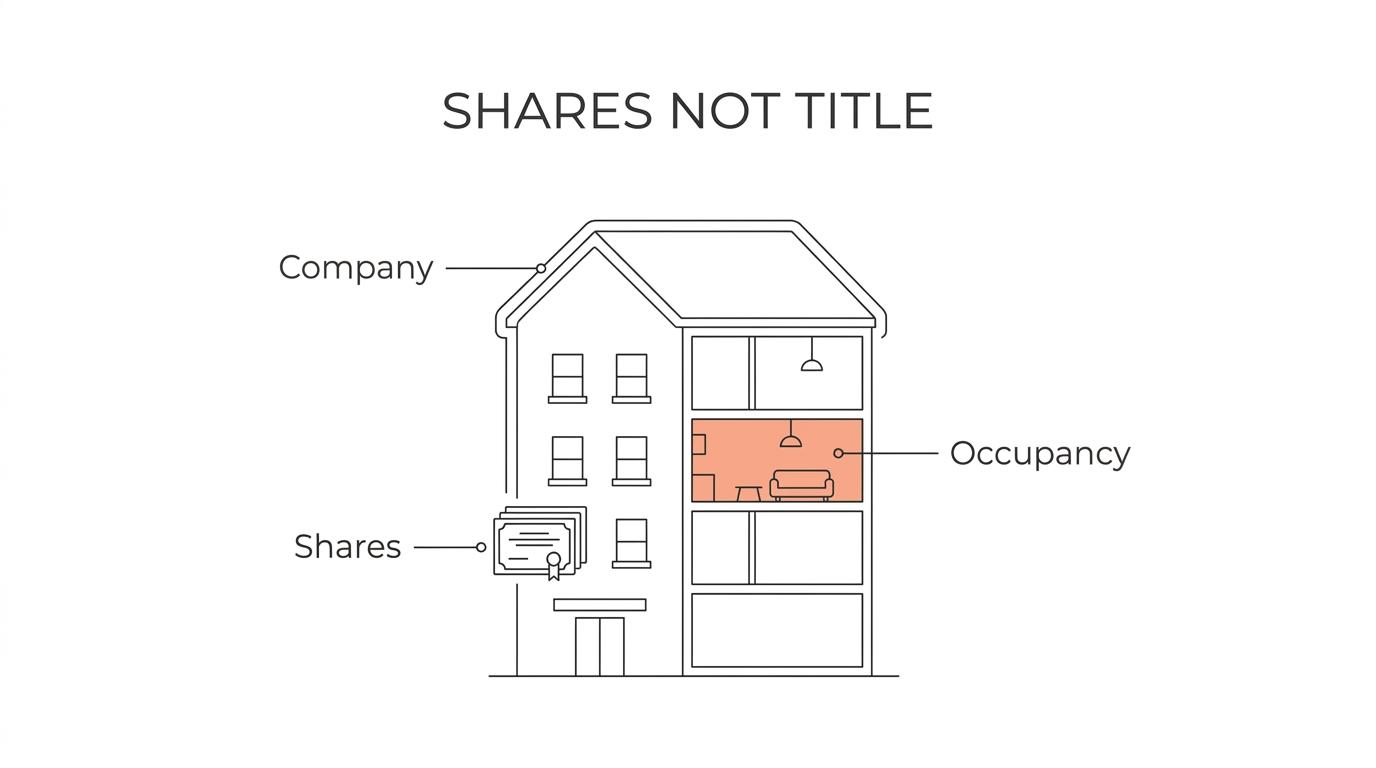
Company title is an older and less common form of unit ownership in NSW. Instead of each flat being held under its own registered title, one company owns the land and the building. A buyer acquires shares in that company.
Those shares usually give the buyer an exclusive right to occupy a specific unit, and sometimes a car space or storage area as well. In practical terms, you live in a defined apartment, but legally you are not receiving a standard Torrens title lot in your own name.
That distinction is the starting point for everything else.
For first home buyers, this can feel counterintuitive. You may inspect a one-bedroom unit in Sydney, Wollongong, Newcastle or elsewhere in NSW and see something that looks no different from a strata apartment. Yet the legal rights, internal rules, and approval steps can be very different once the contract is opened and the company records are reviewed.
What buyers acquire with company title in NSW
The central idea is simple: the company holds the legal title to the building, while the buyer holds shares linked to occupation rights.
A buyer will usually receive evidence of their interest through company documents and a share certificate, rather than a registered title showing them as owner of a strata lot. The right to occupy the apartment is commonly set out in the company constitution and related occupancy arrangements.
After that point, the purchase starts to look less like a standard apartment transfer and more like a transfer of shareholding tied to housing rights.
- Legal structure: one company owns the land and building
- Buyer receives: shares in that company
- Occupancy right: an exclusive right to occupy a nominated unit
- Evidence of interest: usually company records and a share certificate, not a separate Torrens title
- Practical result: the buyer controls occupation of the unit, but through share ownership rather than direct land title
This is why company title contracts often need closer attention than a routine unit purchase. Some standard residential contract review services in NSW exclude company title matters altogether, simply because they are not ordinary strata transactions.
Company title vs strata title in NSW
For many buyers, the clearest way to assess company title is to compare it with strata.
A strata purchase usually gives you a registered lot and a clear place on the land titles register. A company title purchase usually gives you shares plus occupation rights under the company’s internal rules. That difference affects the transfer process, lender appetite, renovation approvals, and the speed at which a deal can move.
Here is a practical NSW-focused comparison:
| Feature | Company title | Strata title |
|---|---|---|
| Legal ownership | Company owns land and building | Buyer owns a registered strata lot |
| What the buyer acquires | Shares plus exclusive right to occupy | Torrens title to the lot |
| Transfer process | Often subject to company approval | Standard conveyancing and registration process |
| Internal controls | Company constitution may tightly regulate occupation, sale, and changes | By-laws apply, but title structure is more familiar |
| Lender appetite | Some lending bodies are cautious | Widely accepted by lenders |
| Land tax treatment in NSW | Shareholder can be deemed owner of their unit for land tax purposes | Owner assessed on their strata lot in the ordinary way |
This does not mean company title is inherently poor value. Some company title apartments are well located, well managed, and priced more attractively than comparable strata units. The point is that the lower entry price can come with extra layers of approval and risk management.
Why first home buyers in NSW should pause before exchange
First home buyers often focus on deposit size, monthly repayments, and whether the kitchen needs work. With company title, the bigger issue is often control.
The company constitution and internal approval process may affect who can buy, how a share transfer occurs, whether a mortgage is accepted, and what alterations can be made. Even a straightforward resale can involve more steps than buyers expect.
That friction can show up in several places.
- lender policy limits
- company approval requirements
- slower transfer timing
- tighter alteration controls
- narrower resale market
A company title building may be perfectly manageable if the rules are sensible and the records are in good order. Still, it is not the sort of purchase where a buyer should rely on assumptions carried over from a standard strata apartment in NSW.
Finance and lender policy for company title in NSW
Finance is one of the biggest practical hurdles.
Official NSW guidance has long warned that lending bodies are more reluctant to lend on company title property. From a lender’s point of view, the security is less straightforward than a normal registered title. That can narrow your lender options or lead to different loan terms.
A first home buyer may face one or more of these issues:
- Loan availability: fewer lenders may accept the property
- Deposit expectations: a larger deposit may be required
- Valuation caution: the valuer may take a more conservative view
- Approval timing: the bank may need extra documents before formal approval
This is one reason pre-approval should never be treated as the finish line. A pre-approval based on your income and deposit is not the same as property approval for a specific company title unit.
If you are comparing a company title apartment with a strata apartment in the same NSW suburb, the asking price alone does not tell the full story. The cheaper property can become the more difficult purchase if finance is restricted.
Land tax on company title units in NSW
Land tax is another area where company title behaves differently.
Under NSW land tax rules, company title units are treated in a special way. Each shareholder can be deemed to be the owner of the part of the building they are entitled to occupy. That part is treated as though it were a lot in a freehold strata scheme for assessment purposes.
The key point is this: land tax liability is attached to the shareholder, not the company itself.
For an owner-occupier buying a first home, land tax may not be the issue driving the purchase decision today. Even so, it deserves attention if your plans may change later, if you might keep the property as an investment, or if your broader property holdings in NSW could trigger assessment questions.
A conveyancer or property tax adviser can help you identify whether the structure has downstream effects for your ownership plans.
Documents to review before exchanging a company title contract in NSW
With strata, buyers often focus on the contract, the strata report, and finance. With company title, the due diligence needs to go wider.
You need to know not only what the contract says, but also how the company is run and what rights sit behind the shares being transferred. The constitution, company records, approval requirements, and financial position can all affect the real value of the deal.
A careful pre-exchange review often covers the following:
- Constitution and occupancy rights: confirm the unit allocated to the shares, any car space rights, and restrictions on occupation or transfer
- Transfer approval rules: check whether the company must approve the incoming shareholder or mortgage
- Alteration controls: identify whether renovations, flooring changes, or other works need consent
- Company records and finances: review levies, arrears, major works, disputes, and any signs of weak management
This is where many first home buyers benefit from specialist help. A low-cost contract review designed for standard residential property may not be enough if the property is company title. Ask upfront whether the reviewer handles company title matters, and whether the fee covers the extra documents involved.
Common company title issues NSW buyers should ask about
A buyer does not need to become a company law specialist before making an offer. They do, however, need good questions.
Ask whether the company has a clear process for approving a transfer of shares. Ask whether there have been recent disputes over renovations, noise, parking, or building works. Ask whether there are planned capital expenses that could affect affordability in the first few years of ownership.
Ask the lender a separate set of questions as well. Will the bank lend on this exact property? What maximum loan-to-value ratio applies? What documents are needed before the loan can go unconditional?
Small answers can reshape the whole transaction.
When specialist NSW conveyancing advice matters for company title
Company title purchases are not impossible. They just require a more careful approach than many first home buyers expect.
An experienced NSW conveyancer can help identify what is actually being transferred, whether company approval is needed, how the constitution affects your intended use of the unit, and whether the contract leaves gaps around finance or occupancy rights. That work is most valuable before exchange, when a buyer still has room to negotiate, walk away, or ask for missing records.
For buyers across NSW, that early review can be the difference between picking up a well-priced apartment with eyes open and committing to a structure that does not suit your lender, your budget, or your future plans.


