

Buying your first property in New South Wales can feel exciting one minute and intensely technical the next. You inspect a home, think about your budget, and then suddenly you are facing a contract of sale, disclosures, title details, strata records, lender deadlines, and settlement figures. This is where a conveyancer steps in.
A conveyancer in NSW does far more than shuffle forms from one inbox to another. Their work sits at the legal and practical centre of a property transaction, helping buyers and sellers move from agreed price to completed settlement with far more clarity and control. For first home buyers, that guidance can make the difference between a confident purchase and an expensive mistake.
Why NSW first home buyers need a conveyancer
For a first home buyer, the real value of a conveyancer is not simply legal compliance. It is timing, risk management, and calm decision-making at points where the stakes are high.
In NSW, a conveyancer helps you meet the legal requirements involved in buying a home. That starts before you are committed and continues right through to settlement. If the property is freestanding home, the process may involve extra responsibilities and documents compared with a freestanding home. If the property is going to auction, there is even less room for late legal review.
A good conveyancer brings structure to a process that can otherwise feel rushed.
- Contract review
- Risk checks
- Communication with the agent and lender
- Settlement preparation
- Title transfer
Contract of sale review in NSW before you commit
One of the most valuable jobs a conveyancer performs is reviewing the contract of sale before you sign. In NSW, that review should happen early, ideally before you make an offer or bid at auction.
For sellers, the law is strict. A residential property in NSW cannot be marketed until a contract of sale has been prepared by a solicitor or licensed conveyancer and made available. That means the legal framework exists from the beginning, not after a deal is struck.
For buyers, the contract review is where many hidden issues first come into view. A conveyancer checks the terms, looks for unusual special conditions, and advises whether any changes should be requested. In NSW, if a buyer wants the contract changed, a solicitor or licensed conveyancer can make those amendments on the buyer’s behalf. A real estate agent cannot change the contract.
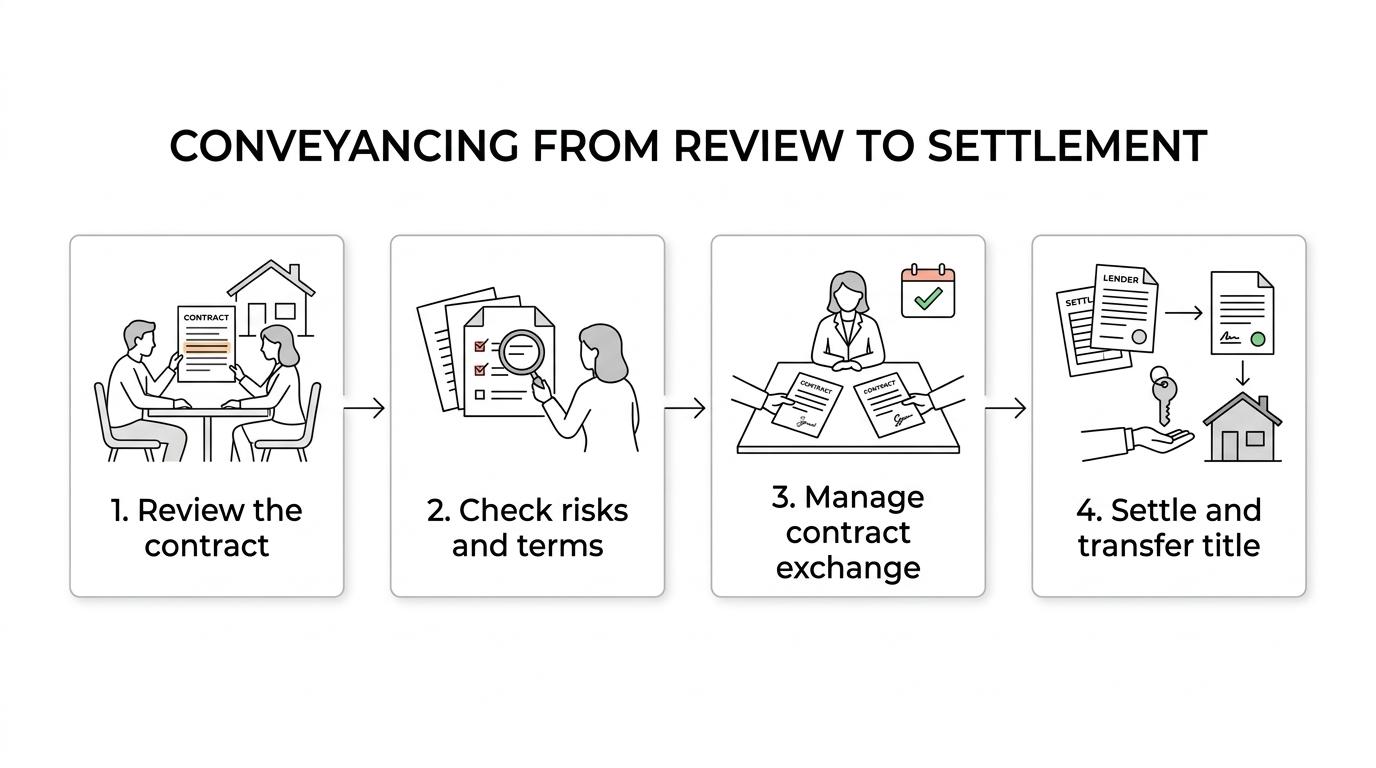
This matters even more for first home buyers, who are often seeing these clauses for the first time.
| NSW transaction stage | What a conveyancer does | Why it matters for first home buyers |
|---|---|---|
| Before offer or bid | Reviews the contract of sale | Flags risky clauses before you are locked in |
| Pre-exchange | Requests amendments if needed | Helps shape fairer terms and clearer obligations |
| Exchange | Manages the exchange process | Reduces mistakes at the point of commitment |
| Between exchange and settlement | Orders checks, liaises with parties, tracks deadlines | Keeps the matter moving and avoids last-minute surprises |
| Settlement | Finalises figures and transfer steps | Helps ownership pass correctly and on time |
NSW property searches and legal checks a conveyancer manages
A conveyancer’s role includes checking the legal position of the property, not just the headline price. That usually means reviewing title details and the documents attached to the contract, then arranging or recommending extra searches and inspections where needed.
The exact scope will depend on the property. A strata apartment in Sydney, Newcastle, Wollongong or the Central Coast usually raises different questions from a house on a suburban block. Strata ownership can bring ongoing levies, by-laws, defect issues, works funds, and records of disputes or major building expenditure. A freestanding property may raise different concerns around boundaries, easements, or planning matters.
NSW Fair Trading notes that conveyancing work can include organising surveys and building inspections, giving advice on conveyancing documents, and arranging registration of title documents. That does not mean the conveyancer is acting as a building expert. It means they help coordinate the legal process around those checks and explain how the results may affect the deal.
Before exchange, a conveyancer may focus on issues like these:
- Title details: checking who owns the property and whether there are restrictions affecting use or transfer
- Contract conditions: reviewing settlement dates, inclusions, exclusions, and special clauses
- Strata records: checking whether the lot carries extra obligations, levies, or known building issues
- Searches and inspections: helping arrange the checks needed to support an informed decision
- Risk areas: spotting legal issues that deserve follow-up before you commit
Sometimes the best advice is simple: pause, ask another question, or renegotiate before emotion takes over.
Exchange of contracts and the NSW cooling-off period
Exchange of contracts is the point where a purchase becomes far more serious. A conveyancer helps make sure the documents are signed correctly, the timing is managed properly, and any agreed changes are reflected in the final version of the contract.
If a cooling-off period applies, your conveyancer can explain how it works, what your rights are during that period, and what happens if you decide not to proceed. If no cooling-off period applies, which can happen in some NSW transactions, that needs to be clear before you sign.
This is one of the easiest stages for first home buyers to underestimate. The property may feel “secured” once an offer is accepted, yet legal commitment usually turns on the exchange itself, not the informal deal beforehand.
Settlement tasks a conveyancer handles in NSW
After exchange, the work shifts from contract review to transaction management. This is where people often realise how much sits behind a smooth settlement.
Your conveyancer will generally liaise with the other party’s representative, your lender or mortgage broker, and the agent. They track due dates, prepare or review transfer documents, and make sure the matter is ready to settle. NSW Fair Trading includes attending settlement and arranging registration of title documents within the type of work conveyancers perform.
There is also money to reconcile. In NSW, the conveyancing process identifies unpaid or outstanding expenses, including rates and utility charges, and those figures are adjusted at settlement. These are often called prorated settlement adjustments. They are designed to ensure each side pays their fair share for the period they own the property.
For first home buyers, this stage is often where small details carry real financial weight.
- Lender coordination: making sure mortgage documents and funds are ready on time
- Settlement adjustments: calculating rates, water, and other apportioned outgoings
- Transfer steps: preparing for title transfer and registration
- Final checks: confirming the matter is ready to settle on the agreed date
Some conveyancers also help first home buyers identify where transfer duty advice or concession paperwork needs attention, especially if a buyer may be eligible under current NSW settings. Eligibility rules can change, so this is an area where current, transaction-specific advice matters.
Selling property in NSW: conveyancer tasks before and after listing
While buyers often get most of the attention, conveyancers are just as central to the sale side of a transaction.
In NSW, the seller cannot lawfully offer a residential property for sale without a contract of sale prepared by a solicitor or licensed conveyancer. That means the conveyancer’s role begins before the marketing campaign starts. They prepare the contract, gather the prescribed documents, and make sure the agent has a compliant contract available for interested buyers.
Once a buyer is found, the seller’s conveyancer handles exchange, responds to legal questions raised by the buyer’s side, coordinates settlement, and manages the financial adjustments that need to be made on completion.
For sellers buying another home at the same time, the timing becomes even more sensitive. Linked settlements can create pressure, and this is where early legal preparation pays off.
Licensed conveyancers in NSW and professional standards
Not everyone offering property transaction help is permitted to do conveyancing work. In NSW, conveyancers must be licensed through NSW Fair Trading. They are also expected to hold professional indemnity insurance.
That licensing framework matters. It gives buyers and sellers a way to check whether a person holds a valid licence and is authorised to perform this work. When large sums, strict deadlines, and legal rights are involved, credentials are not a minor detail.
A conveyancer may assist with:
- preparing contracts
- advising on conveyancing documents
- exchanging sale contracts
- arranging registration of title documents
- attending settlement
For first home buyers, this is a useful reminder that property advice comes from different professionals with different limits. An agent markets and negotiates. A broker helps with finance. A building inspector reports on physical condition. A licensed conveyancer handles the legal transfer process and protects your position within it.
Choosing a conveyancer in NSW for a first home purchase
The right conveyancer is not simply the cheapest quote in your inbox. Cost matters, especially for first home buyers, though value comes from responsiveness, clarity, and attention to risk.
Many NSW buyers now prefer online conveyancing because it can be faster and more convenient, especially when documents and updates need to move quickly across Sydney, the Illawarra, regional NSW, and other areas. Fixed-fee pricing is also attractive because it gives buyers a clearer sense of total legal costs from the beginning.
When comparing conveyancers, look for practical signs that the service will support the way you need to buy.
- NSW licence: confirm the conveyancer holds a current NSW licence
- Professional indemnity insurance: ask whether appropriate cover is in place
- Fixed fees: check what is included and what may be charged separately
- Turnaround times: ask how quickly contracts can be reviewed before an offer or auction
- Communication style: choose someone who explains issues clearly, without jargon or delay
Some NSW conveyancing practices also offer online service across the state, fixed transparent fees, and contract review turnarounds within 24 to 48 hours. For a first home buyer trying to act quickly on a property, that kind of timing can be genuinely useful.
What first home buyers in NSW should expect from the process
A strong conveyancing experience should leave you feeling better informed at each stage, not more confused. You should know what you are signing, what deadlines matter, what risks have been identified, and what still needs to happen before settlement.
That is the real day-to-day work of a conveyancer in NSW. Yes, there is paperwork. There are also legal checks, contract amendments, title transfer steps, settlement adjustments, communication with lenders and agents, and steady guidance through one of the biggest financial decisions most people make.
For first home buyers in NSW, that support is not a luxury. It is part of building a purchase on solid ground.


