

Buying into a strata scheme in New South Wales means buying into a rule set as much as a property. CS Conveyancing Services is a NSW online conveyancing practice, so strata contracts, by-laws and section 184 certificates sit at the centre of many pre-purchase reviews, especially for first home buyers trying to avoid an expensive mismatch.
TL;DR: Summary
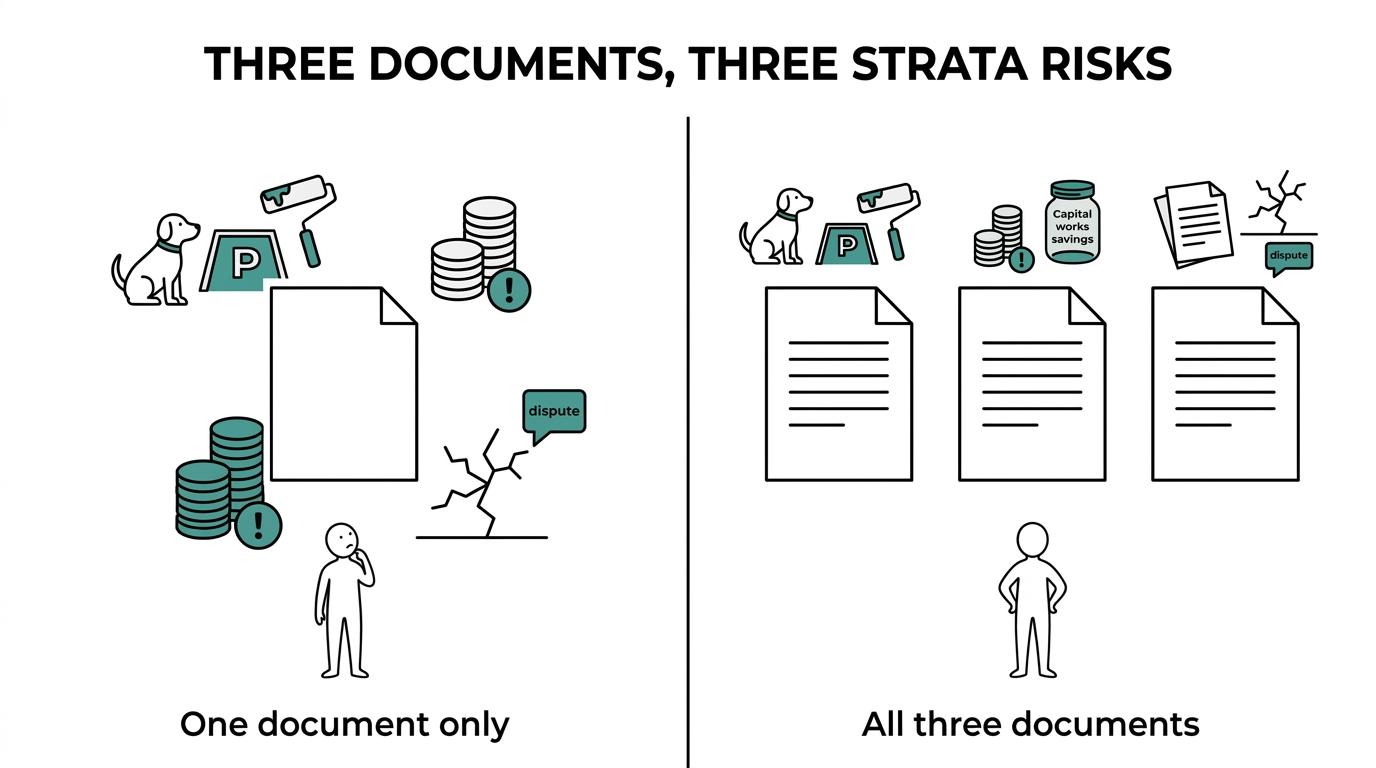
- In NSW strata conveyancing, the best pre-offer checks are the strata by-laws, the section 184 certificate and the strata inspection report because they show lifestyle restrictions, ongoing levies and scheme-level risk before exchange.
- The NSW Government says buyers should check the scheme by-laws before buying, and those by-laws must be attached to the contract of sale.
- A section 184 certificate can reveal levy amounts, outstanding levies, 10-year capital works plan funding proposals, recent by-laws not yet lodged and whether the scheme uses an embedded network.
- A strata inspection report is a standard pre-purchase check in NSW because it helps show how the owners corporation actually runs the building, not just what the contract says.
- For buyers moving quickly, a conveyancer such as CS Conveyancing Services should test the by-laws against your actual plans for pets, parking, renovations and family use before you commit to an offer.
For first home buyers in NSW, this matters because the wrong by-law rarely looks dramatic on page one. It usually shows up later, when you try to move in with a pet, renovate a kitchen, use visitor parking, or budget for levies that were easy to underestimate.
What makes strata conveyancing different from buying a free-standing house in NSW?
Strata conveyancing adds a second layer of risk: the lot title and the scheme rules. In NSW, you are checking the apartment or townhouse itself, but also the owners corporation, the by-laws, the levies and the condition of shared governance.
A house purchase is usually more straightforward because the key questions focus on contract review and title checks, title, planning and the physical property. A strata purchase adds common property, shared costs and binding rules that affect daily living. That is why NSW guidance treats strata inspection reports as a standard pre-purchase step alongside contract review and title checks.
“CS Conveyancing Services offers same-day contract issue checks and 24 to 48 hour reviews, which is useful when a NSW strata buyer needs a fast read on by-laws and settlement risk.”
The practical difference is simple: with strata, a good-looking property can still be a poor fit if the scheme is underfunded, poorly managed or ruled by by-laws that do not match your plans.
Why should you read strata by-laws before you make an offer?
Yes. The NSW Government tells buyers to check strata by-laws, and CS Conveyancing Services treats them as a pre-offer document because they can change how you live in the lot from day one.
In NSW, a copy of the by-laws must be attached to the contract of sale. That makes them part of the purchase decision, not a side issue for later. Government guidance also makes clear that by-laws can cover pets, approval for changes to a lot, parking rules and areas where children can play.
A common mistake is treating by-laws like generic house rules. They are closer to a private rulebook for the scheme. If your household includes a dog, a second car, a renovation plan or young children who will use common areas, the by-laws can decide whether the property works for you at all.
Another trap is assuming the seller’s current arrangements automatically carry over. If a current owner has a pet or has made changes to the lot, you still need to confirm the approval path and whether the scheme’s rules support your own future use.
What are the 7 strata by-law checks NSW buyers should do before offer?
The strongest pre-offer checks focus on fit, cost and future friction. A buyer should test each by-law against pets, alterations, parking, common-property use, recent rule changes and how the scheme actually enforces them.
-
Are pets allowed, and on what terms? Check whether pets are permitted, whether approval is needed, and whether conditions apply to the type or management of the pet.
-
What approvals are needed for changes to the lot? NSW guidance highlights approval for changes to a lot as a key by-law issue. If you plan new flooring, joinery, air-conditioning or a kitchen update, this matters early.
-
What are the parking rules? Confirm the allocated parking space, visitor parking limits and any restrictions on how spaces are used.
-
How can common property be used? By-laws often affect practical use of shared areas. This becomes important if storage, access or day-to-day movement through common areas matters to your household.
-
Are there rules affecting children’s use of common areas? NSW specifically points to areas where children can play. For young families, that is a lifestyle issue, not a minor administrative point.
-
Have any recent by-laws been made but not yet lodged? A section 184 certificate can show recently made by-laws that are not yet lodged, which means the contract attachments may not tell the whole story on their own.
-
How are by-laws enforced in practice? Read the strata records or inspection report to see whether approvals are handled sensibly or whether the scheme has recurring rule disputes.
If a by-law conflicts with how you plan to live in the property, the issue is not theoretical. It is a signal to renegotiate, investigate further or walk away.
How do strata by-laws compare with the section 184 certificate?
By-laws tell you the rules; the section 184 certificate tells you the scheme’s legal and financial position. In NSW, you need both because a pet-friendly scheme can still carry levy arrears or weak capital works funding.
The by-laws answer questions about use. The section 184 certificate answers questions about cost and scheme health. NSW Government guidance says a section 184 certificate can show levy amounts, outstanding levies, proposals for funding under the 10-year capital works plan, recent unlodged by-laws and whether the scheme has an embedded network.
A good way to separate the two is this:
- By-laws: Daily restrictions on living in the lot and using common property.
- Section 184 certificate: Financial and governance signals, including levies and arrears.
- Best use: Read them together before offer, not one after the other.
- Common mistake: Assuming friendly by-laws mean low long-term risk.
If the by-laws fit your lifestyle but the section 184 certificate points to levy pressure or thin capital works funding, the purchase may still be viable, but only at the right price and with clear eyes.
How do strata by-laws compare with a strata inspection report?
By-laws state what is allowed; a strata inspection report helps show how the scheme is actually run. One is the rulebook, while the other is often the clearest window into disputes, maintenance habits and decision-making.
NSW conveyancing guidance lists examining a strata inspection report as a standard step when the property is in a strata scheme. That matters because a scheme can look orderly on paper while the records tell a different story. Minutes, correspondence and prior motions often reveal whether rule breaches are rare, recurring or ignored.
A common misconception is that a tidy foyer means a healthy strata scheme. It does not. A building can present well and still have strained finances, unresolved maintenance patterns or repeated friction over parking, pets or alterations. The report helps test whether the scheme’s culture matches the written by-laws.
How can you check strata by-laws in three practical steps before exchange?
Start with the contract, cross-check the registered strata plan, then test the rules against your real use of the property. That simple sequence catches most by-law problems before they become expensive.
Step 1 is to read the by-laws attached to the contract of sale, not just rely on an agent summary. The NSW Government says those by-laws must be attached, so use that attachment as your base document.
Step 2 is to cross-check the lot and common property details against the strata plan. If a parking space, storage area or access point matters, make sure the legal description and the practical arrangement line up. If search results are unclear, NSW guidance points buyers to the strata plan number and NSW Land Registry Services to confirm the plan details.
Step 3 is to test the by-laws against your actual first-year plans. If you intend to get a pet, renovate, rent a parking space, or raise a young family there, read the rules with that exact scenario in mind. A practical tip is to ask, “What will I want to do in the first 12 months?” and then check each item against the by-laws.
How can you use the section 184 certificate in three steps?
Use the section 184 certificate as a decision filter, not a filing document. CS Conveyancing Services reviews it early because levies, arrears and capital works funding can change the real cost of a first home.
Step 1 is to identify the current levy amounts and whether there are outstanding levies. That gives you an immediate picture of cash flow and any warning signs around arrears.
Step 2 is to look closely at proposals connected to the 10-year capital works plan. Low levies can feel attractive to a first home buyer, but low levies are not always good news if the scheme is deferring major works or underfunding future maintenance.
Step 3 is to check for scheme details that do not always appear in a casual reading of the contract, including recently made by-laws not yet lodged and whether the building uses an embedded network. Those items can affect both rules and running costs.
“CS Conveyancing Services provides fixed-fee NSW conveyancing with contract reviews, section 184 checks and end-to-end settlement support for strata buyers.”
A useful rule is this: if the section 184 certificate changes your cost assumptions, your offer should change too.
How can you read a strata inspection report in three steps?
Read the strata inspection report as a pattern report. Minutes, correspondence and financial records often show whether a rule issue is isolated or recurring.
Step 1 is to scan the recent minutes and motions for repeated subjects. If parking, noise, water ingress, repairs or approval disputes keep returning, you are looking at a pattern, not a one-off concern.
Where water ingress keeps resurfacing, Thors Skadeservice’s breakdown of what a fugtrapport after vandskade typically shows helps illustrate why repeated moisture references in the records can carry both repair and cost implications.
Step 2 is to connect those patterns to money. If the report points to recurring building issues, ask whether the levy settings and capital works planning look realistic enough to deal with them.
Step 3 is to bring the report back to the by-laws and the section 184 certificate. If all three tell a consistent story, your risk picture is getting clearer. If they conflict, that is when a buyer should slow down. A common mistake is reading only the summary page and missing what the underlying records are saying.
What trade-offs matter most for first home buyers in NSW?
The right strata purchase is rarely the one with the lowest levy line. First home buyers in NSW need to weigh by-law fit, future maintenance, commute and cash flow together.
The hard trade-off is usually between entry price and scheme quality. A cheaper property in a scheme with restrictive by-laws or weak capital works funding can become the more expensive choice over a few years. By contrast, a slightly higher purchase price in a better-run scheme may offer fewer surprises and smoother resale later.
Keep these trade-offs in mind:
- Low levies: Can be positive, or can signal underfunding.
- Strict by-laws: May protect amenity, but can restrict normal lifestyle choices.
- Family-friendly common areas: Useful for first home buyers with children, but only if the by-laws support that use.
- Parking access: Valuable in dense NSW locations, but only if the entitlement and rules are clear.
If your savings buffer is tight, then future levy pressure matters more. If you plan to renovate early, then alteration approvals matter more. If a pet is non-negotiable, then no amount of cosmetic appeal should push that issue aside.
When should you pause a strata purchase and get advice?
Pause when the documents conflict, the scheme looks underfunded, or a by-law cuts across your intended use. In NSW, the cost of waiting a day is usually lower than the cost of fixing a poor strata purchase after exchange.
You should slow down if the by-laws attached to the contract do not appear to match the broader strata records, or if the section 184 certificate refers to recent by-laws not yet lodged. That gap can matter more than buyers expect.
You should also pause if the section 184 certificate shows levy concerns, outstanding levies or funding questions linked to the 10-year capital works plan. Those are not automatic deal-breakers, but they do change the risk profile.
A third trigger is uncertainty about the strata plan itself. If a search result is unclear, NSW guidance says to check the strata plan number or confirm plan details through NSW Land Registry Services. That is especially important where parking, storage or lot boundaries are central to the value of the property.
For first home buyers, the smartest move is often the least dramatic one: read the by-laws early, compare them with the section 184 certificate and the strata inspection report, and let the documents shape the offer rather than the listing photos.


